
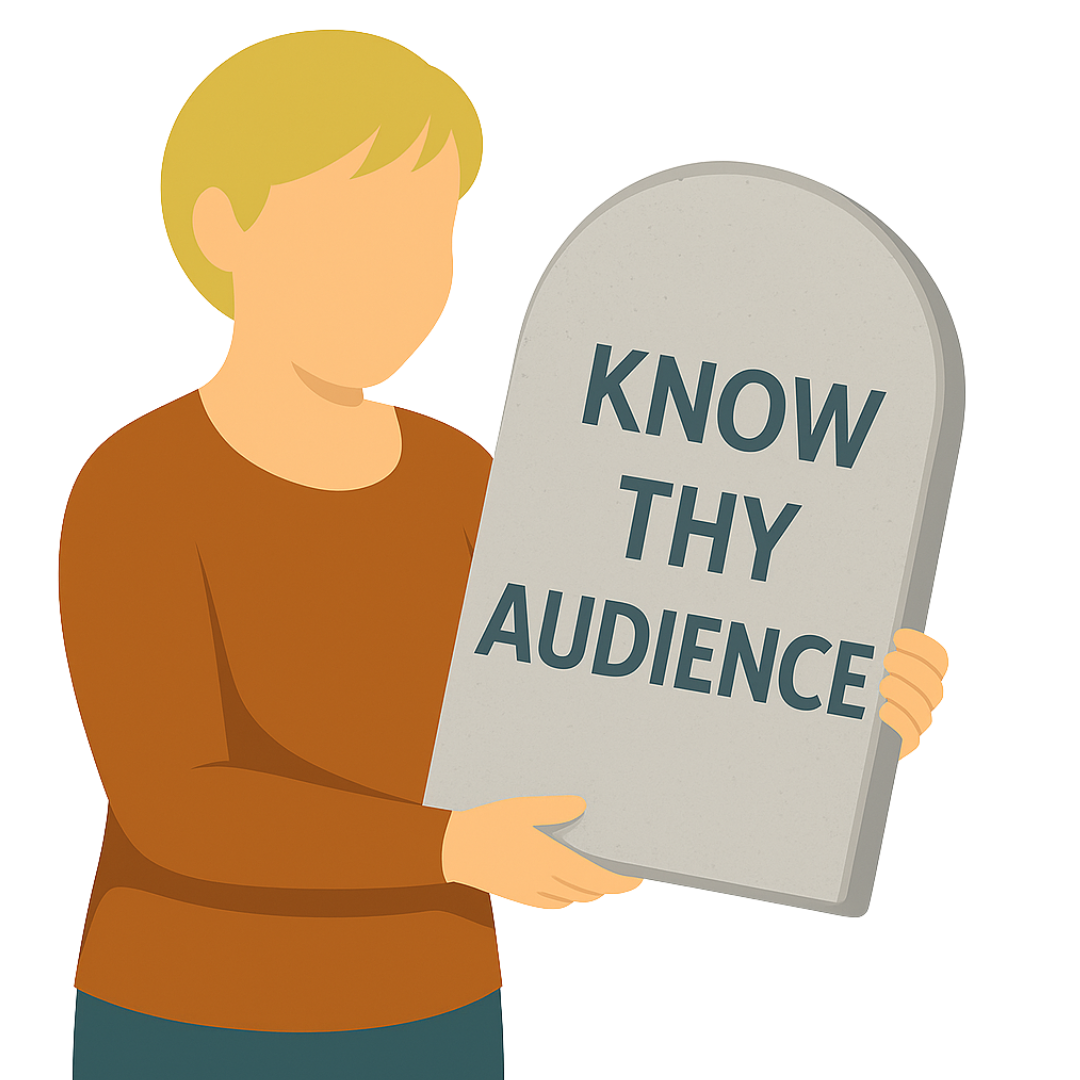

Unless you want to feel like Moses wandering in a digital desert, defining your target audience must be the very first step in content marketing. In fact, before you choose a platform, before you write a headline, before you post a single tweet, you need to know who your target audience really is.
This week’s blog explains what a target audience is, why defining it is so critical, and how you can use that knowledge to shape your content marketing strategy. You’ll learn how to segment and describe your audience, how to match content to the buyer’s journey, and why treating your audience like people rather than numbers is the first commandment of successful content marketing.
Why Knowing Your Target Audience Comes First
Every good story needs a beginning, and for content marketing, the beginning is knowing your audience. Without it, you’re building strategy on shifting sand. This section looks at why identifying your target audience is the cornerstone on which the rest of your content is built.
Your target audience is the specific group of people most likely to connect with your content, products, or services. Adobe defines it simply: “A target audience is a specific group of people who are most likely to be interested in and benefit from your product, service, or message” (Adobe).
As a small business owner, you already interact with your audience daily. For example, think about your best clients, the ones who light you up when they walk through the door. What makes those relationships so strong? The answers to that question are the foundation of your content marketing strategy.

How to Define and Segment a Target Audience
It isn’t enough to say “my customers are everyone.” Even the Israelites were divided into tribes. In the same way, your content becomes stronger when you know which groups you’re truly speaking to. This section explains how audience segmentation works and how to go beyond surface-level demographics.
Chances are, you don’t have just one target audience. That’s why audience segmentation is essential. Write your groups down separately. Define their needs and describe them precisely. Of course, customer demographics like age, location, and profession are a good start, but don’t stop there.
Today’s marketers also consider psychographics (values, aspirations, challenges) and behavioral signals (search habits, clicks, downloads). As a result, building a buyer persona around these insights helps you move beyond the surface and understand what really motivates your audience. The deeper your audience insights, the more relevant and effective your content becomes.
Matching Content to Your Target Audience
Even commandments come with context. Once you know who you’re speaking to, the next step is delivering the right message in the right format at the right time. This section shows how audience knowledge shapes both the type of content you create and where you choose to share it.
Once you’ve defined your target audience, you can align your content with where they are in the buyer’s journey:
- Awareness stage: blog posts, videos, social storytelling
- Consideration stage: how-to guides, case studies, comparisons
- Decision stage: testimonials, proof of results, reviews
Audience knowledge also shapes your format and channel choices. For instance, do your people prefer quick tips on Instagram, in-depth reads on LinkedIn, or short-form video on TikTok? When you know your target audience, you can match the right content type with the right distribution channel.
Think People, Not Numbers
Thou shalt not treat people like statistics. Numbers may look impressive on a dashboard, but the people behind them are what really matter. This section explains why respect and personalization are critical if you want your audience to stay engaged.
A follower on Instagram, a blog subscriber, a Facebook like—these are not just metrics. They’re people. In other words, your target audience expects content that feels personal and respectful. Even small gestures, such as segmenting newsletters or tailoring blog posts to seasonal needs, signal that you see them as individuals and not data points.
Content Marketing Institute puts it clearly: “You need to understand—and write specifically—for your audience. Creating personas, segmenting by behavior and needs, and regularly revisiting audience insights are critical to long-term success” (Content Marketing Institute).
Target Audience – Final Thoughts
Know thy audience. Understanding your target audience is the First Commandment of content marketing, the one that everything else rests upon. Ultimately, when you truly know who you’re speaking to, you’ll never feel lost in the desert. Every piece of content will have purpose, direction, and meaning. And that, if we’re being honest, is the promised land.
Go Forth and Know Thy Audience
Defining your target audience is not just a commandment, it’s the foundation for every piece of content you create. Still, knowing your audience is only the first step. The real challenge is turning that knowledge into blogs, emails, and social posts that connect with the right people at the right time. That’s where I can help. If you’re ready to build a content marketing strategy rooted in clarity and purpose, let’s talk. Together we can make sure your message reaches the audience it was always meant for.