

For many small business owners, marketing feels like a scramble — a Facebook post here, an email there, a blog if there’s time.
The result?
Inconsistent messaging, missed opportunities, and stress.
That’s why it’s important to plan what you will post, where you will post it, and when you will post it. A content calendar is a popular approach marketers use to make sure everything lines up. Far from being another item on your to-do list, it’s a tool that keeps your marketing connected to your bigger goals.
What Is a Content Calendar?
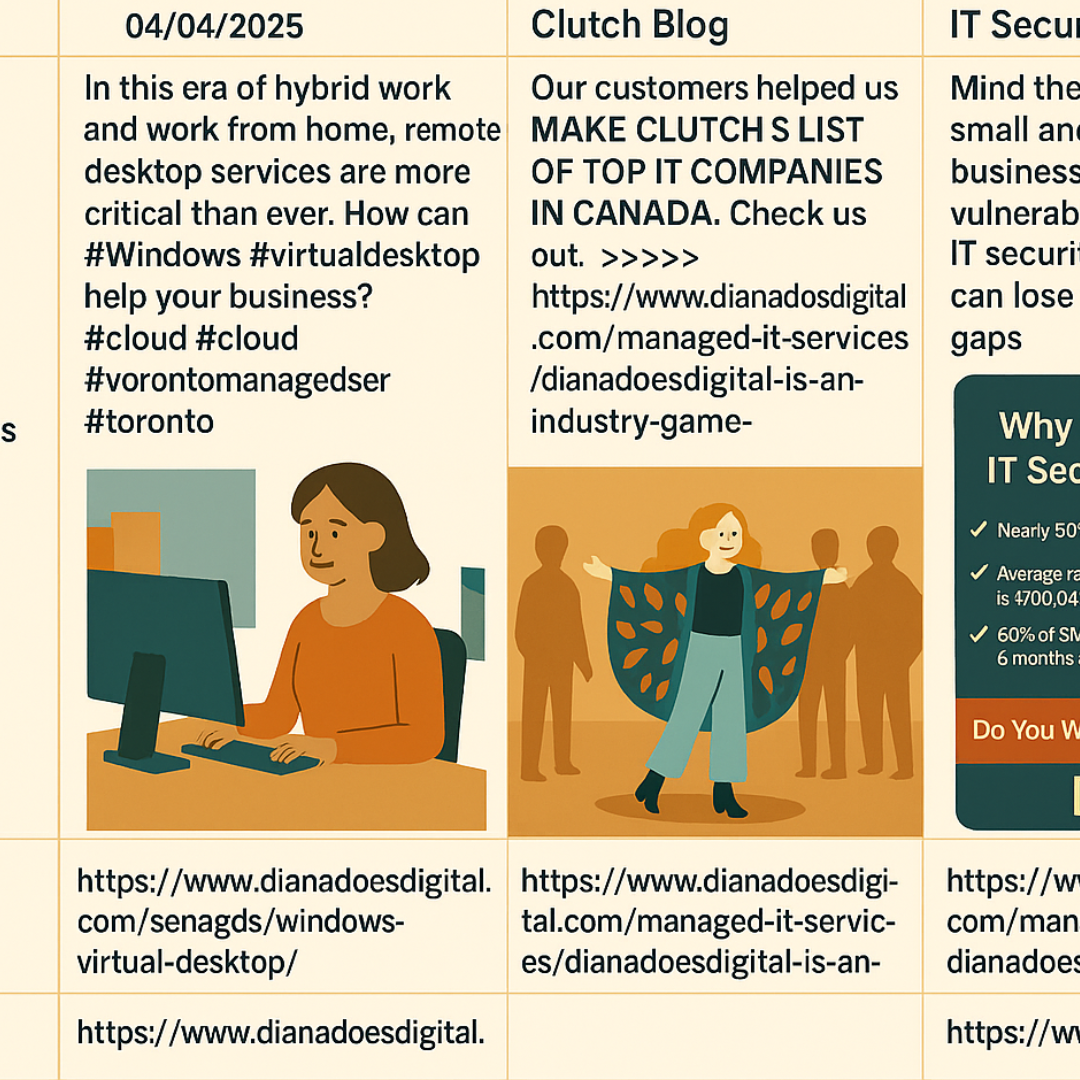
A content calendar is simply a plan for your marketing. It outlines what you’ll publish, where it will appear, and when it will go live. Some businesses keep it simple with a spreadsheet, while others use tools like Trello, Asana, or Canva’s planner.
If you’re not sure where to start, a quick Google search for “free content calendar templates” will give you dozens of examples you can adapt. The format matters less than the function: every entry should connect back to your overall marketing strategy so that the content you share isn’t just consistent — it’s purposeful.
What Is the Purpose of a Content Calendar in Marketing?
A content calendar takes the guesswork out of your marketing. Instead of posting in a panic, you’re moving with intention, and that pays off. Businesses that post consistently see stronger audience trust and higher engagement, according to Sprout Social. With a plan in place, you can time your blogs, emails, and social posts to support launches, align with seasons, and keep your brand voice steady across every channel. Most importantly, every entry in your calendar should connect back to your overall marketing goals. If a piece of content doesn’t support awareness, engagement, or conversion, it doesn’t belong on the calendar.
What Should Be Included in a Content Calendar?
At its simplest, a content calendar tracks publishing dates, topics, and platforms. More detailed versions include content format, working titles, assigned owners, draft status, keywords or hashtags, and links to assets. As Business News Daily explains, these details keep teams organized and ensure nothing falls through the cracks. But the real test of a strong calendar isn’t how much information it contains — it’s whether it aligns with the goals of your marketing strategy.
What Is the Strategic Value of a Content Calendar?
The real strength of a content calendar isn’t just organization — it’s strategy. By mapping content out in advance, you can anchor your schedule to meaningful events such as product launches, industry milestones, or seasonal holidays. It also allows you to balance evergreen blogs, which build long-term SEO, with timely campaigns that respond to what’s happening right now. Liana Technologies recommends beginning with your goals and filling your calendar with content that supports them. In this way, the calendar becomes not just a schedule but a framework that connects everyday marketing activity to your overall plan.
What Tools Can Help Build a Content Calendar?
You don’t need complicated software to create a content calendar. Many small businesses thrive using a shared Google Sheet or Excel file. Project management platforms like Trello or Asana make it easy to assign tasks and set deadlines, while Canva’s planner integrates scheduling with design. For those who want more advanced features, platforms like Semrush or CoSchedule offer built-in analytics. The best tool is the one you’ll actually use consistently — even a simple spreadsheet can become powerful if it’s tied to your strategy.
What Does a Content Calendar Workflow Look Like?
A calendar works best when it supports your daily process. Think of it as a cycle: capture ideas, assign them, draft the content, place it in the calendar, and schedule it to publish. Once the content is live, review its performance and adjust upcoming posts accordingly. As Cube Creative notes, the most effective calendars are flexible enough to make room for trending topics but structured enough to keep your overall strategy intact.
What Is an Example of a Content Calendar in Action?
To see the value of a calendar, imagine a local bakery heading into the holiday season. With a plan in place, November doesn’t just mean scattered posts — it means a coordinated strategy. Black Friday specials are promoted a week in advance with email teasers and social posts. Small Business Saturday is an opportunity to highlight the bakery’s community roots. Early December content shares festive recipes or behind-the-scenes holiday prep, while the week before Christmas focuses on gift cards and pre-order deadlines. After the rush, New Year’s content shifts to themes of fresh starts, perhaps showcasing healthier menu items or catering options.
Key Dates to Plan Around in November & December
- Black Friday – November 29, 2025
- Small Business Saturday – November 30, 2025
- Cyber Monday – December 1, 2025
- Christmas – December 25, 2025
- New Year’s Eve – December 31, 2025
Anchoring content to these milestones keeps your marketing relevant and top-of-mind during one of the busiest seasons of the year.
Content Calendar & The Bigger Picture
At the end of the day, a content calendar isn’t just about posting regularly. It’s about ensuring your content supports the goals of your broader marketing strategy. When you treat it as part of your overall arsenal — alongside SEO, social media, and email marketing— it becomes more than a schedule. It becomes the framework that keeps your marketing aligned, consistent, and strategic.