
Ever get the feeling that marketers invent new buzzwords just to keep everyone else confused?
“Content marketing” and “digital marketing” are two of the biggest culprits. They sound interchangeable, but they’re not.
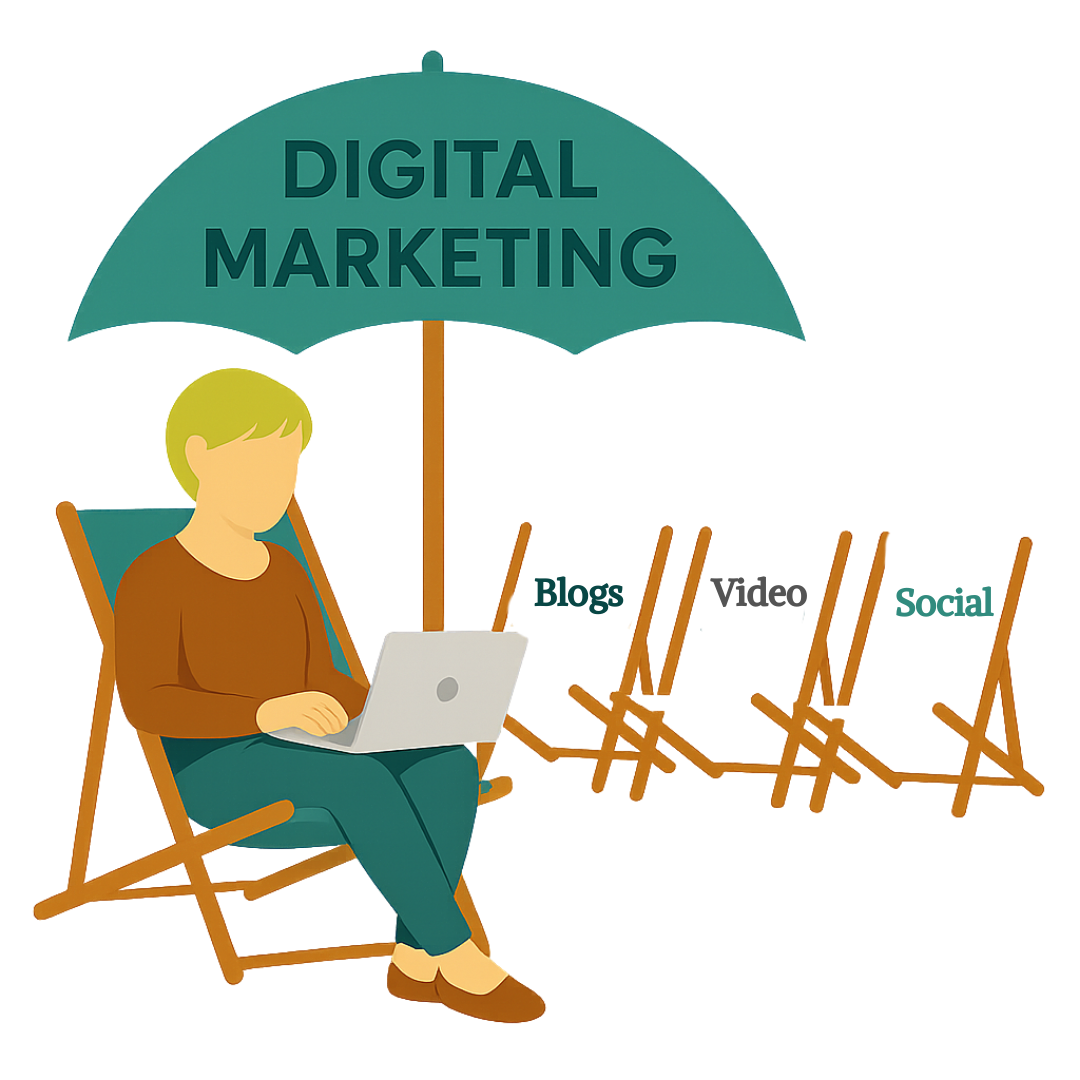
Think of digital marketing as the big umbrella, and content marketing as one of the chairs sitting underneath it. Both have their place, but one is definitely broader than the other. In this blog, I try to break it down for you with a few examples along the way.
What Is Digital Marketing?
Digital marketing is any marketing that happens online. It’s the giant toolbox that includes all the ways businesses reach people through digital channels. That could be email marketing, social media, paid ads, search engines, or even text messages.
And digital marketing is big business these days. In 2025, US companies are expected to spend $221 billion on digital advertising alone, showing just how massive this umbrella category has become.
To make this more concrete, here are a few things that live inside the digital marketing toolbox:
- Social media advertising: Running a Facebook ad for a new product launch.
- Search engine optimization (SEO): Making sure your website shows up when someone Googles “best dog groomer near me.”
- Email campaigns: Sending your customers a discount code to their inbox.
- Paid search ads (PPC): Bidding on keywords so your link appears at the very top of Google results.
- GEO (Generative Engine Optimization) = the next evolution of SEO. Instead of optimizing only for search engines like Google, you’re optimizing content so it’s cited or surfaced inside AI-generated answers (ChatGPT, Perplexity, Google AI Overviews, etc.).
In short, if it involves pixels and persuasion, it’s probably digital marketing.
What Is Content Marketing?
Content marketing is more specific. It’s the art of creating and sharing useful, valuable content that builds trust and draws people in over time. Instead of selling directly, content marketing answers questions, entertains, and educates.
And the great thing about content marketing is that, more often than not, people genuinely prefer it. For example, surveys show that 70% of consumers would rather learn about a company through articles than through ads.
Examples of content marketing in action include:
- Blogs: A coffee shop writes an article about “The 5 Best Ways to Brew Cold Brew at Home.”
- Videos: A fitness trainer posts free 10-minute workouts on YouTube.
- Podcasts: A financial planner hosts a weekly show on “Money Moves That Matter.”
- Social posts: A bookstore posts reading guides on Instagram rather than just “Buy Now” links.
Done well, content marketing feels less like an ad and more like a friendly conversation.
So, What’s the Difference Between Content Marketing vs. Digital Marketing?
Here’s where it gets confusing: content marketing is part of digital marketing, but digital marketing is much bigger. Digital marketing can (and often does) include paid ads, sponsorships, and promotion-heavy tactics. Content marketing focuses on organic, long-term relationships built through helpful, interesting material.
Think of it this way:
- Digital marketing is like throwing a party and hiring a band to get people on the dance floor.
- Content marketing is like hosting a dinner where you cook everyone’s favorite meal and keep the conversation flowing.
Both can get people to like you, but the vibe is very different.
Why Does It Matter?
You might be thinking: Does anyone outside of marketers really care about this distinction? The answer is yes. Knowing the difference helps businesses understand where to put their time, money, and energy.
Here’s one more number that drives the point home: companies that blog generate 67% more leads per month than those that don’t. That’s content marketing directly fueling business growth.
When Should You Use Each?
The short answer is both. But the balance depends on your goals.
If you want fast visibility and clicks, digital marketing tactics like PPC ads or sponsored social media posts can get you in front of people immediately. On the other hand, if you want to build loyalty and a brand that lasts longer than your ad budget, content marketing is your best friend.
Here’s how to think about it:
- Use digital marketing when you want speed. Need sales before the weekend? Run an ad.
- Use content marketing when you want staying power. Want customers who stick with you for years? Publish content that teaches, entertains, or solves problems.
The magic happens when you combine the two. A blog (content marketing) can boost your SEO, and then you can run a digital ad to promote that very blog. That’s marketing synergy at work.
Content Marketing vs. Digital Marketing – Final Thoughts
At the end of the day, digital marketing and content marketing aren’t enemies—they’re teammates. Digital marketing is the whole game plan, while content marketing is one of the star players. Both are essential if you want people not just to find you, but to trust you.
If you’re still not sure where to start, think about what your audience actually needs. Do they need quick info that helps them decide today? Digital marketing will deliver. Do they need trust, education, and a reason to stick around? That’s content marketing’s sweet spot.
Freelance Digital Marketing, Raleigh and Beyond?
Figuring out the right mix of content marketing and digital marketing can feel like trying to assemble furniture without the instructions. That’s where I come in. I help businesses create content strategies that actually work, manage digital campaigns that get results, and keep it all running smoothly without the jargon. Whether you need one-time support or an ongoing partner, I can help you turn marketing confusion into clarity.